

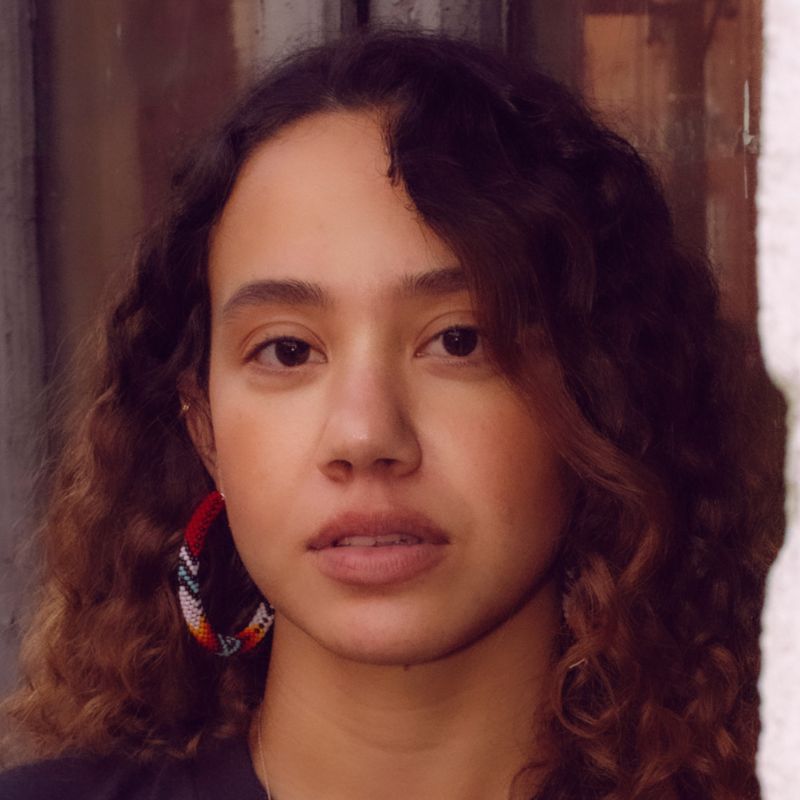
Renita Coursey
Emerging
Folk Art: Visual Arts
Wilmington
"Craving ancestral connection... I truly believe I’m here to help people not forget who we are, who my ancestors were."
Work Samples
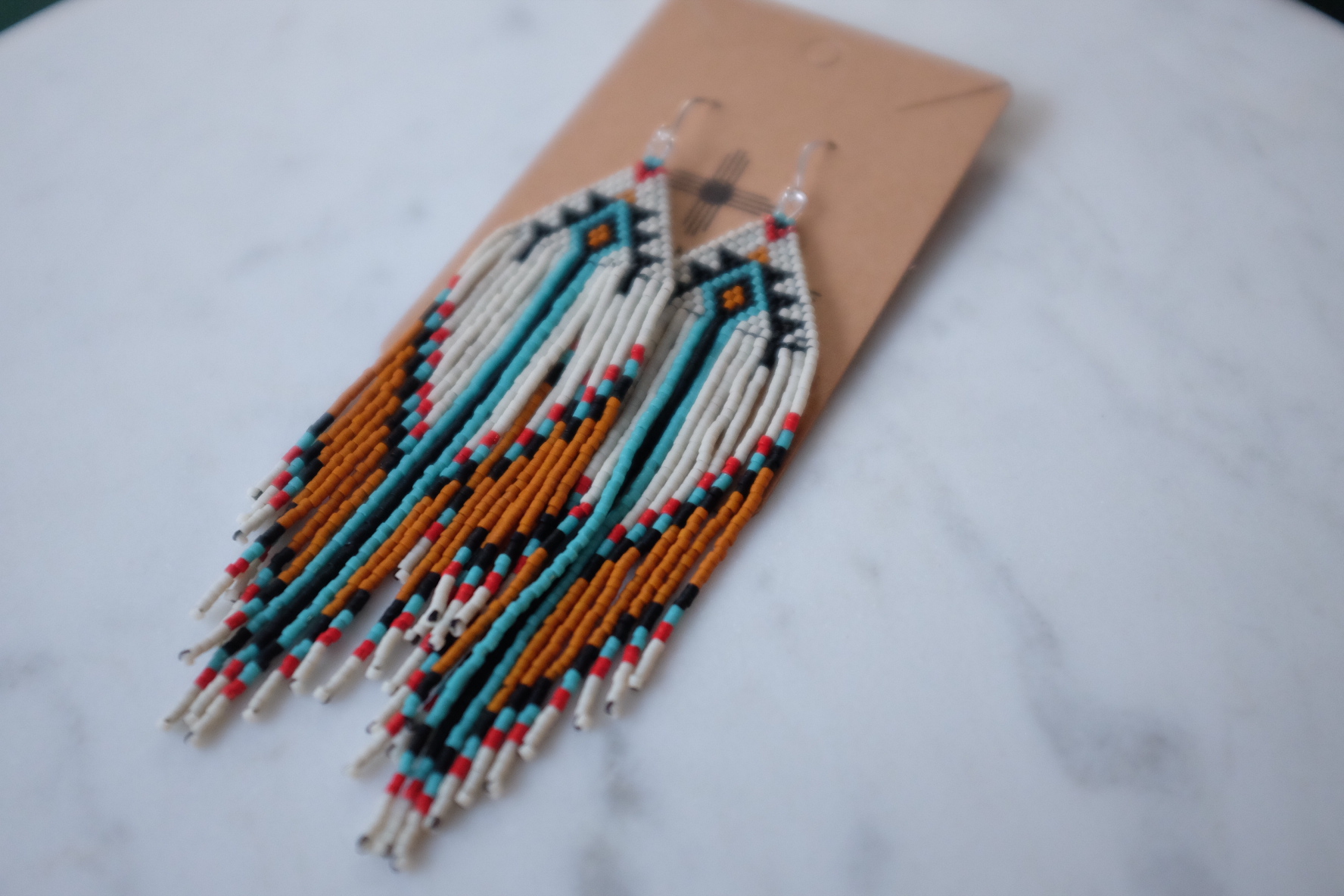
Miyuki Delicas (11/0) and Nymo thread
5 x 2 ½ inches
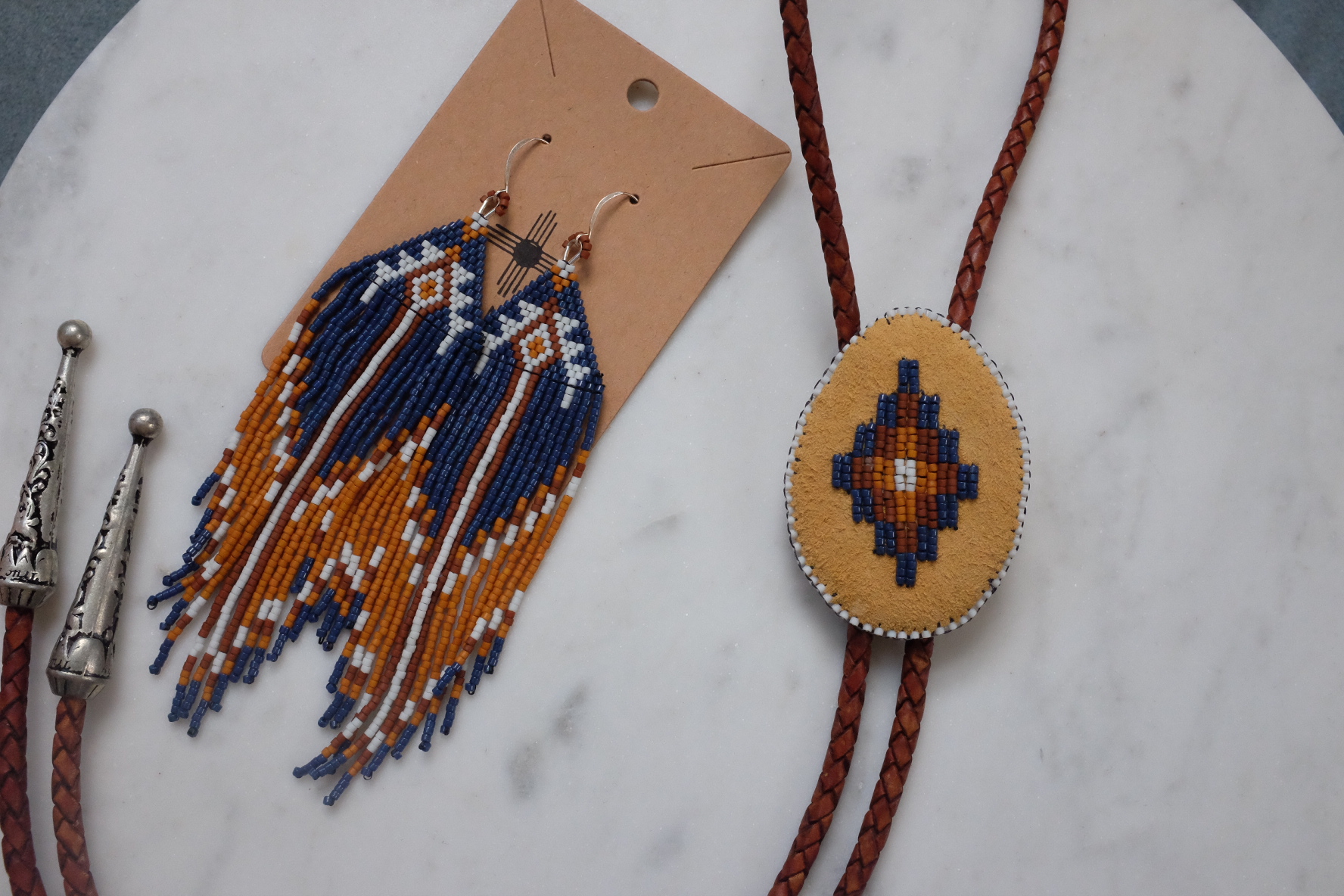
Miyuki Delica size 11/0 beads with Brain tanned deer hide and Nymo B thread
5 x 2 ½ inches
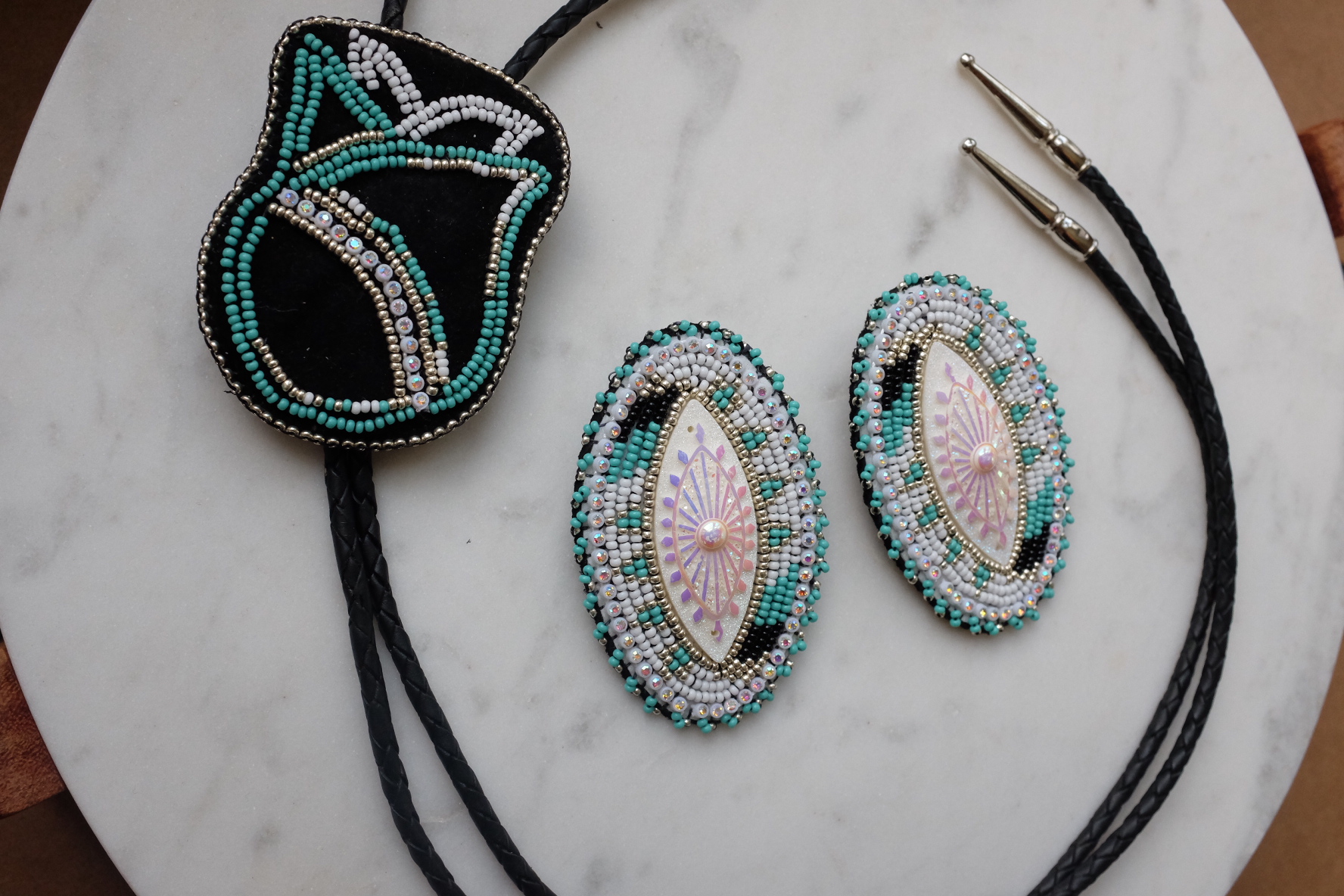
Brain tanned black deer hide & Czech seed beads, sterling silver findings
4 x 3 inches
About the Artist
Written by Gail Obenreder
A true native Delawarean – in all ways – Renita Coursey grew up on Nanticoke land in her hometown of Millsboro, surrounded by her native culture. With an older sister and brother, Coursey lived with her parents on her grandfather’s farmland adjacent to the Nanticoke Indian Tribal Center. Tribal members danced in preparation for powwow right across the street (and still do), but as a child she felt “too shy to participate in any real way.”
When she was eleven, the family moved to southeastern Virginia, and when Coursey was nineteen she joined the U.S. Navy, serving for four years as a Hospital Corpsman. She was stationed throughout the country, finishing her service at a post in Hawaii, where the second-generation veteran remained, graduating from the University of Hawaii in Manoa. After graduation, Coursey found herself “longing to reconnect with my native roots” and returned to her home state and now lives in Wilmington.
“Craving ancestral connection” on her return to Delaware, Coursey began learning the traditional art of beadwork, disciplining herself to practice at night and in the early morning hours while her infant son was asleep.“ As tired as I was then, I am so grateful that I pushed myself to learn whatever I could with the time that I had.” She’s been beading seriously for two years now, working to blend native traditions with modern streetwear.
To expand her artistic practice, Coursey has also learned to sew. Her grandmother was a seamstress and “though I never met her, I feel close to her through the work I am doing now.” She took ribbon skirt-making classes given by tribal elders in her hometown, and “I haven’t been able to leave my sewing machine alone since.” Coursey now makes these ancestral garments and sells them, along with her beadwork, at her tribe’s powwow.
As an artist exploring her lifelong traditions, Coursey was – and continues to be – profoundly influenced by her parents and by her two children. But she is also inspired by the native artists whose skills she feels are “much more polished than my own:” Samantha Whitefeather, Gina Tiger, Skye Paul, and the creators of contemporary native-owned brands like B Yellowtail and Urban Native Era, who align with many of her creative goals.
But all artistic endeavors require tenacity, and beadwork is no exception. It is tedious and “takes a lot of time for a piece to come together.” So Coursey is challenged by the patience and time management that her demanding practice requires, as well as the delayed gratification it entails. But it’s a great reward to start a new project or to finish a piece and “see someone fall in love with something I made.” She also loves connecting with other makers, and Coursey brings a deeper level to her work by “praying for the health and wellbeing of the future wearer as I’m creating the piece.”
Interested in learning and mastering more native traditions, Coursey now explores powwow dancing and creating regalia and moccasins, pursuing these studies along with making mixed media collages when time allows from her work in emergency veterinary medicine.
The Division’s Fellowship comes at a crucial time in her artistic development, allowing Coursey the means to “expand my own artistic practice.” She plans to acquire a larger tent for powwows and additional supplies for making moccasins and regalia, and she’s looking forward to updating the brand photos on her website. “I don’t know exactly what it was that brought me to do the work I am doing, but I am grateful to be here.”