

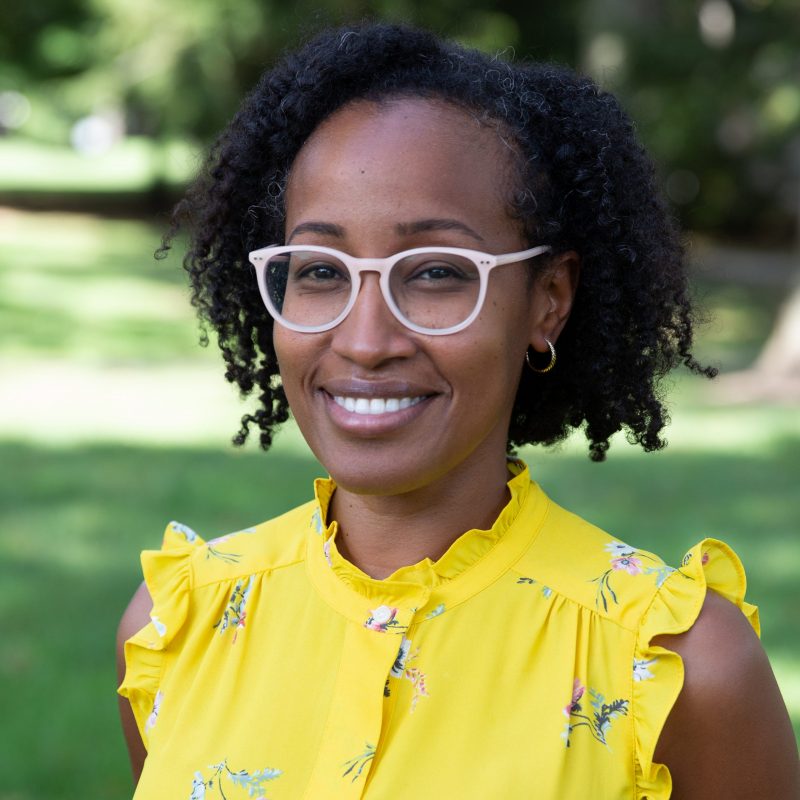
Martha Pitts
Established
Literature: Creative Nonfiction
Middletown
"My essays investigate the spaces between what we know and what we’re told."
Work Sample
excerpt from You were B. (2025)
124 was spiteful. Full of a baby’s venom.
I was born six years after B., my sister, died. She was almost two years old. The discovery came as hazy as the circumstances of her death, though looking back, the clues had always been there. My middle name, for one—B., the same name as my dead sister, though I wouldn’t understand the connection for decades. My sister reminded me years later that our mother used to tell us stories when we were little, fragments really, about a baby who died, told the way mothers sometimes share hard truths through the safety of what sounds like fiction. We’d listened the way good daughters do, half-believing, our small bodies curled against her warmth, filing it away with all the other mysterious pieces of adult life we didn’t yet understand: the smell of her lotion, bright and citrusy, the rhythm of her breathing, the weight of words we sensed meant more than we could grasp.
About the Artist
Written by Gail Obenreder
Martha B. Pitts “weaves together investigations of absence, assimilation, and the stories we tell ourselves about success and belonging.” Born and raised in New Orleans East, she’s been writing ever since she can remember. As third graders, “we kept composition books for writing prompts, and I filled mine with paragraph-long stories.” Some tales were invented and some were true, but “I didn’t distinguish much between the two, and maybe that’s still true of my work.”
Pitts’ path to Middletown, Delaware was a circuitous one. In college she studied English, earning her bachelor’s from Princeton and a master’s degree from George Mason University. After living in Washington DC with her then-husband and two young children, Pitts went back to Louisiana for her English doctorate, minoring in women’s and gender studies. She then embarked on a decade-long university career teaching at Howard, Georgetown, Maryland, Fairleigh Dickinson, and Washington College.
Throughout her busy and accomplished academic life, Pitts knew that “creative nonfiction was always where I wanted to land.” Her current essay series is drawn from the experiences of her mother, who came from East Africa in the 1970s and endured traumas that shaped both her life and that of her daughters.
As a pre-teen Pitts loved reading the novels of R.L. Stine and The Baby-Sitters Club series, drawn by what she now sees as “strong narrative momentum and clear emotional stakes.” She was deeply inspired by Mildred Taylor’s Roll of Thunder, Hear My Cry; the character of Cassie Logan “showed me what a Black girlhood could look like on the page.”
Today Pitts is inspired by her students and by poets like Rita Dove, Elizabeth Bishop, and Ada Limón who “write with precision and emotional clarity,” as well as Jhumpa Lahiri for “her attention to the immigrant experience.” But even as her work has become “more literary and complex,” she’s never forgotten about the early reading that taught her how to “keep a reader turning the pages.”
As Pitts moves more deeply into writing about her mother’s experience, examining “how silence functions both as a protection and a burden,” she’s challenged to write truthfully about her mother “without retraumatizing her or exploiting her story for my artistic purposes.” And as a parent, she must continually carve out the time and space for her writing, something she often felt was “squeezed into the margins of my ‘real’ responsibilities.” But she’s learned to be patient in finding creative space, and now that her children are grown, she plans to dedicate more time to writing.
Pitts finds “deep satisfaction in the craft itself,” in the perfect word or image to create a structure that makes “scattered moments into something meaningful.” She’s also rewarded by delving deeply into family history to “speak aloud what has been whispered or buried for generations.” Pitts has always juggled two identities – parent and artist – so she is “deeply invested in making academic spaces more welcoming for mother-scholars.” And she loves to bake, drawn to its precision and predictably delicious results.
As someone who spent much of her life in academia, where creative work is sometimes considered “less rigorous than scholarship,” Pitts finds that the recognition, validation, and practical support of the Division’s Fellowship “matters deeply.” She plans to use the award to travel to New Orleans, where some of her essays are set. And she also plans to experiment with form, working to expand her “structure and voice in new ways.”