

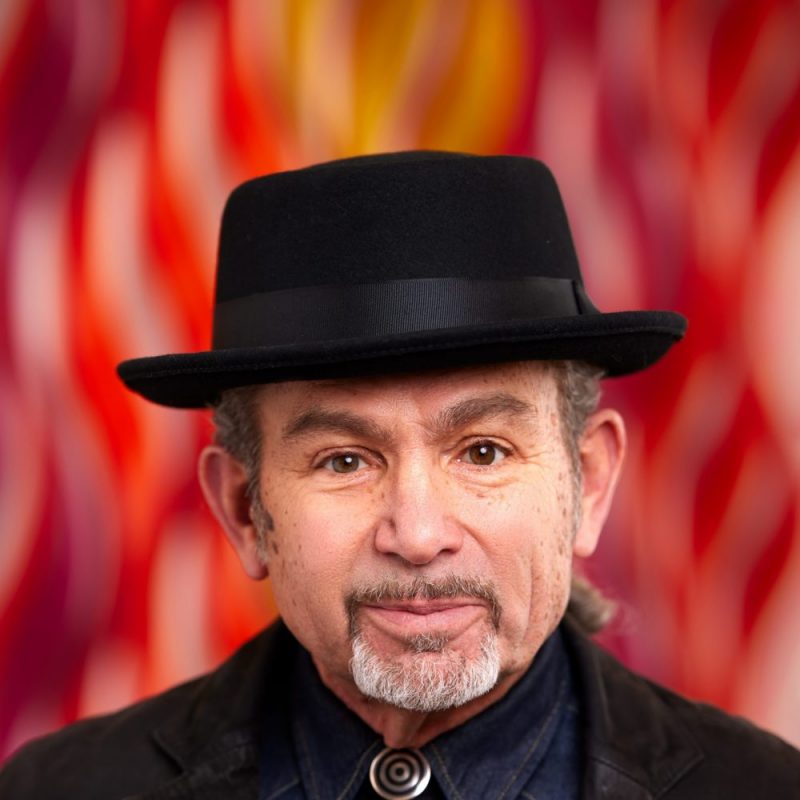
Dennis Beach
Masters
Visual Arts: Sculpture
Wilmington
"“I observe the natural world, then edit, simplify, and abstract its essential elements: shapes, colors, repetitions, and movements. Nothing I’m making comes with directions.”"
Work Samples
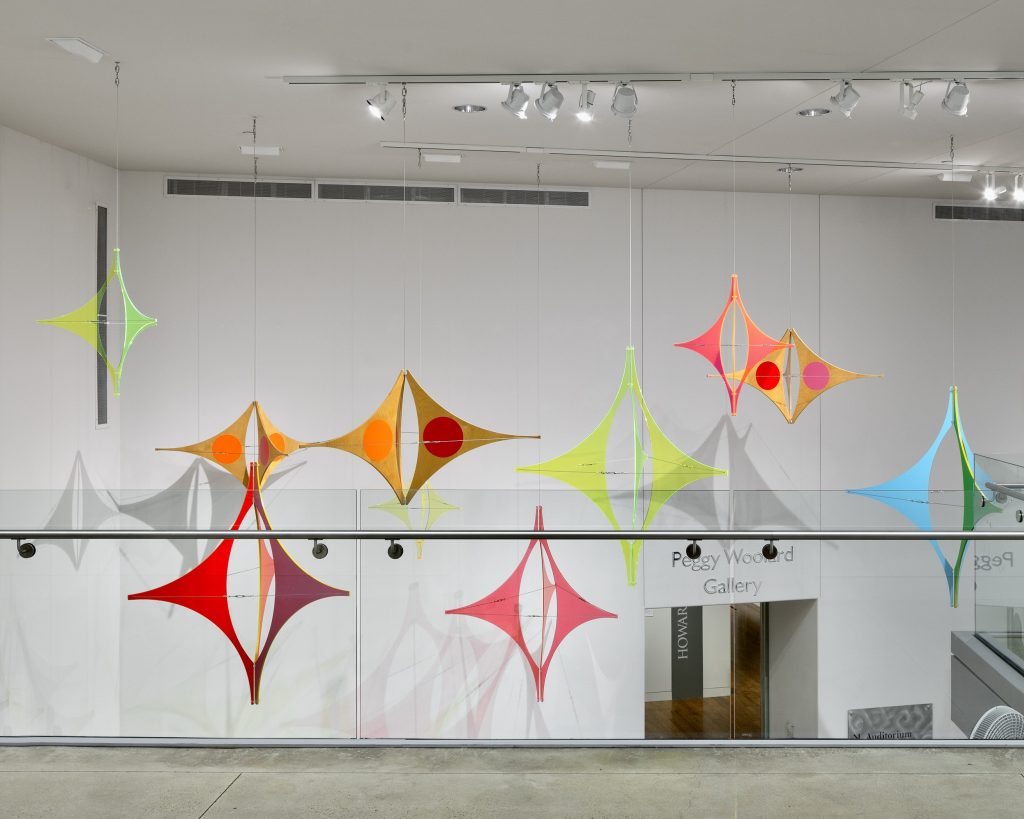
acrylic, plywood, hardware
30 x 20 x 35 feet
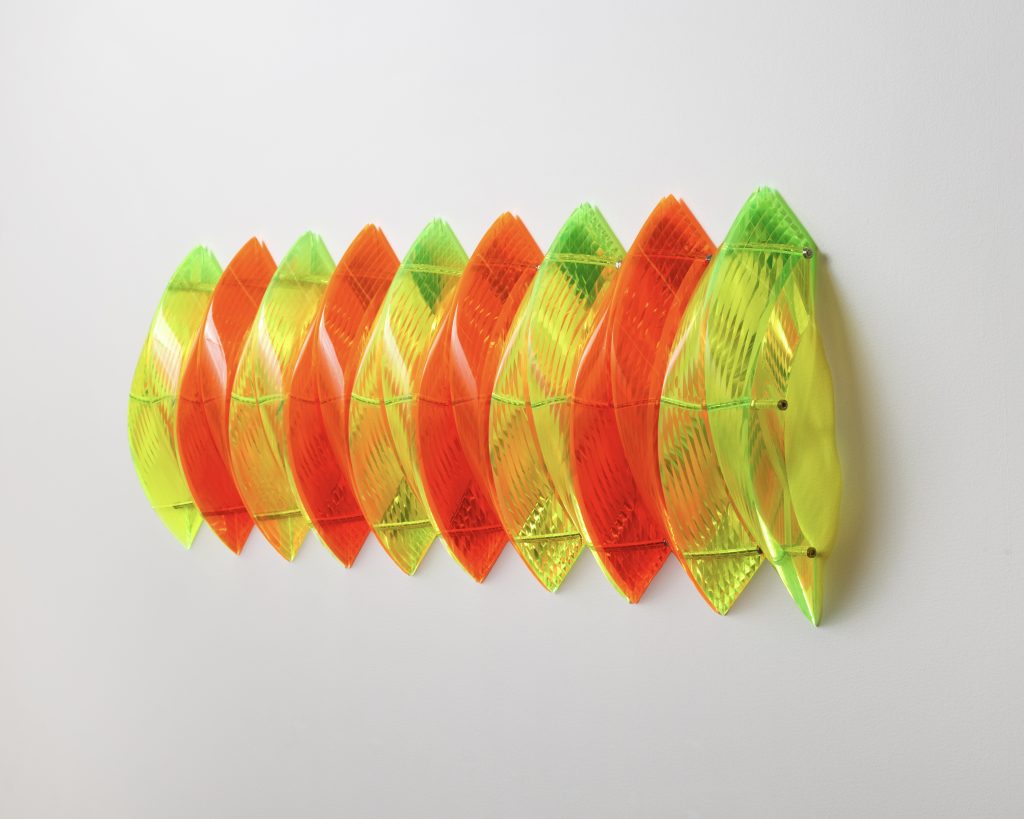
acrylic, stainless steel
14 x 36 x 3 inches
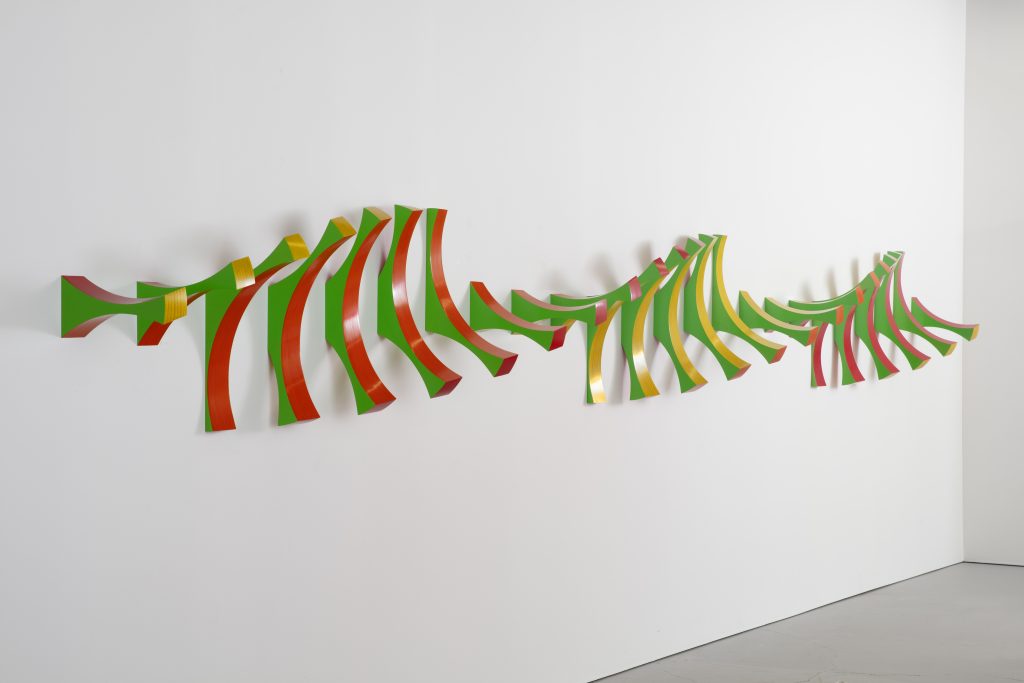
plywood, acrylic, epoxy
30 x 288 x 15 inches
About the Artist
Written by Gail Obenreder
Over his twenty-five years working in the region, Masters Fellow Dennis Beach has become an increasingly familiar and welcome artistic presence. He’s exhibited in nineteen solo and 35 group shows over the past two decades, and his work is held in collections as diverse as Comcast, Dansko, the University of Delaware (where he taught), and the Delaware Art Museum, which recently exhibited several of the major pieces included in his Fellowship application portfolio.
Using high-quality plywood and (most recently) transparent acrylic, Beach creates exceptional, memorable, accessible artworks. In his practice, the artist “transforms materials like plywood, acrylic, and paint into objects that capture the beauty and order I find in nature.”
Beach was born on Maryland’s eastern shore, and though the family moved a lot due to his father’s work, they have always returned to that bucolic area. He feels fortunate to have experienced much of the United States, living as well in Japan during middle school. He has come to understand that “this rich blending of visual landscapes, and a wide perspective on what the world had to offer visually, is a big part of how I create the works that I make.”
Always mechanically inclined, Beach joined the Navy after high school, not realizing that “an inner artist was lurking within.” During his five-year tour of duty, he found that long periods at sea “gave me chance to attempt a little drawing, [and] I remember being a little surprised at what I could produce.” He had always studied woodworking, but when he discovered the work of American sculptor Anne Truitt, Beach was “completely taken” by the perfect balance she achieved in her use of painted wood. Reading her writings “endeared me even more to her ethics of working,” and scores of visits to area museums and shows also greatly influenced his vision and his work.
Beach had earlier attended Baltimore’s Maryland Institute College of Art, but he moved to Wilmington after he met (and subsequently married) a Delaware artist. He enrolled in the University of Delaware’s MFA program in sculpture, which afforded him studio space and an intense, welcome connection with “a great peer group and faculty.” He’s been working at his current studio in Newport since 2008, where his “nice collection of tools and equipment” enable him to produce the elegant works for which he’s become noted.
Visual exploration is “one of the fundamental reasons that I am committed to working as an artist,” and Beach finds that exploration sometimes leads him to working with unfamiliar methods and materials. “The learning curve involved in using a new material or a new tool or method to cut or work with that new material can and often is very challenging,” but drawing on his mechanical skills, he relishes “making things up as I go along.”
Achieving his ever-present goals – “visual excitement, simple beauty, and bringing form and color together meaningfully” – is one of Beach’s greatest rewards, along with the surprises that often arise in his work, the unexpected outcomes that “lead down new roads and directions.” Beach makes a concerted effort to be environmentally responsible in his practice, including avoiding harsh chemicals, good dust collection, and recycling as many of his materials as he can.
Beach received the Division’s Established Fellowship in 2008, and he finds that this current Masters Fellowship, like the previous one, creates “a good kind of pressure” to produce and show new work. This award is important to him as an individual, self-employed artist for the financial cushion it provides, allowing him to acquire the new materials and tools that keep his studio running. But always in search of the “deep satisfaction” of seeing a finished work, Beach is additionally grateful for the Fellowship’s “positive motivation, [something] that I’m very much looking forward to.”