

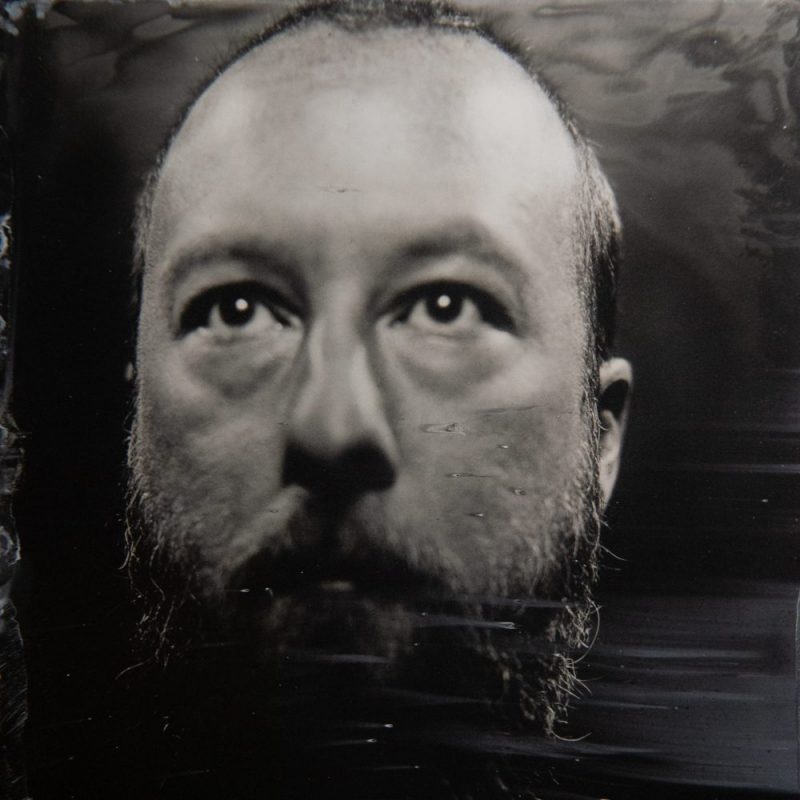
David Warren Norbut
Emerging
Visual Arts: Photography
Wilmington
"The magic I was seeking was overwhelmingly apparent the day I shot and developed my first tintype."
Work Samples (Visual Arts)
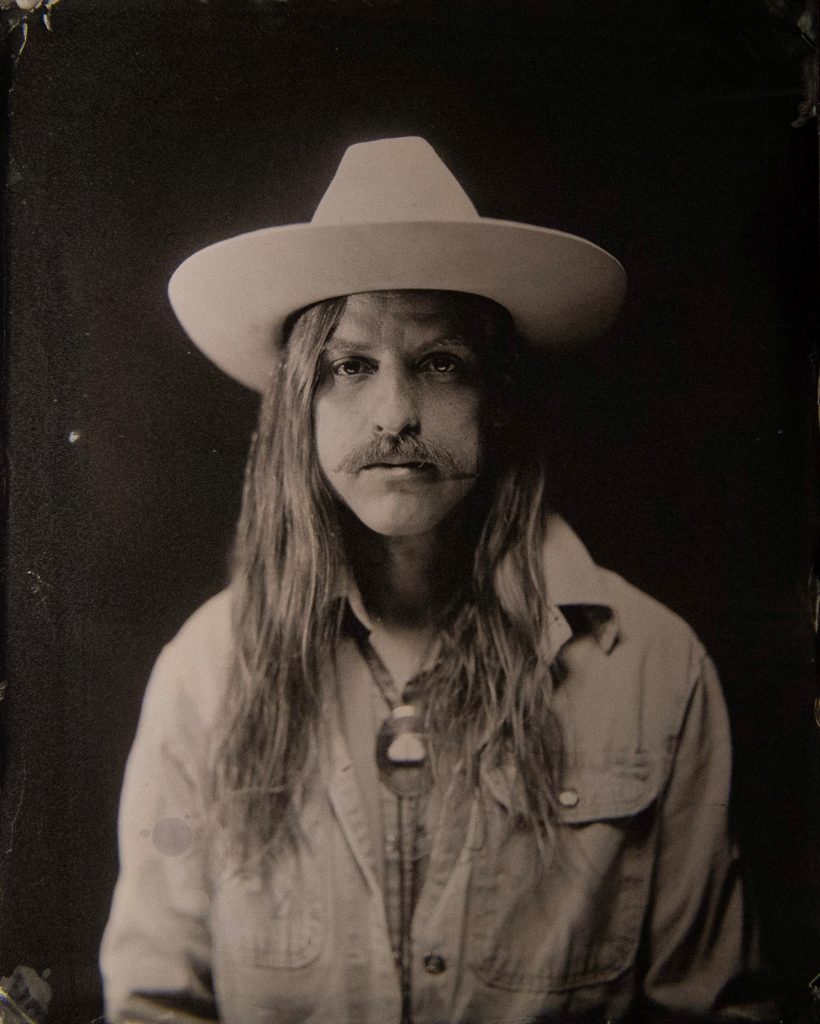
wet plate collodion tintype
5 x 4 inches
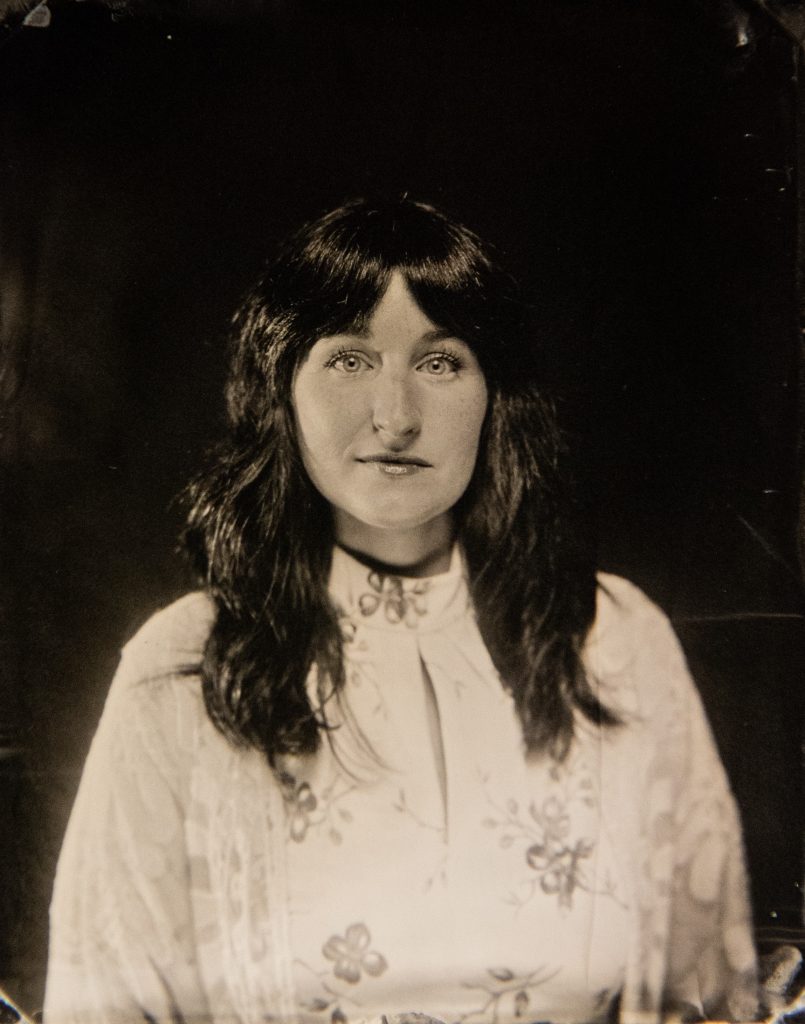
wet plate collodion tintype
5 x 4 inches
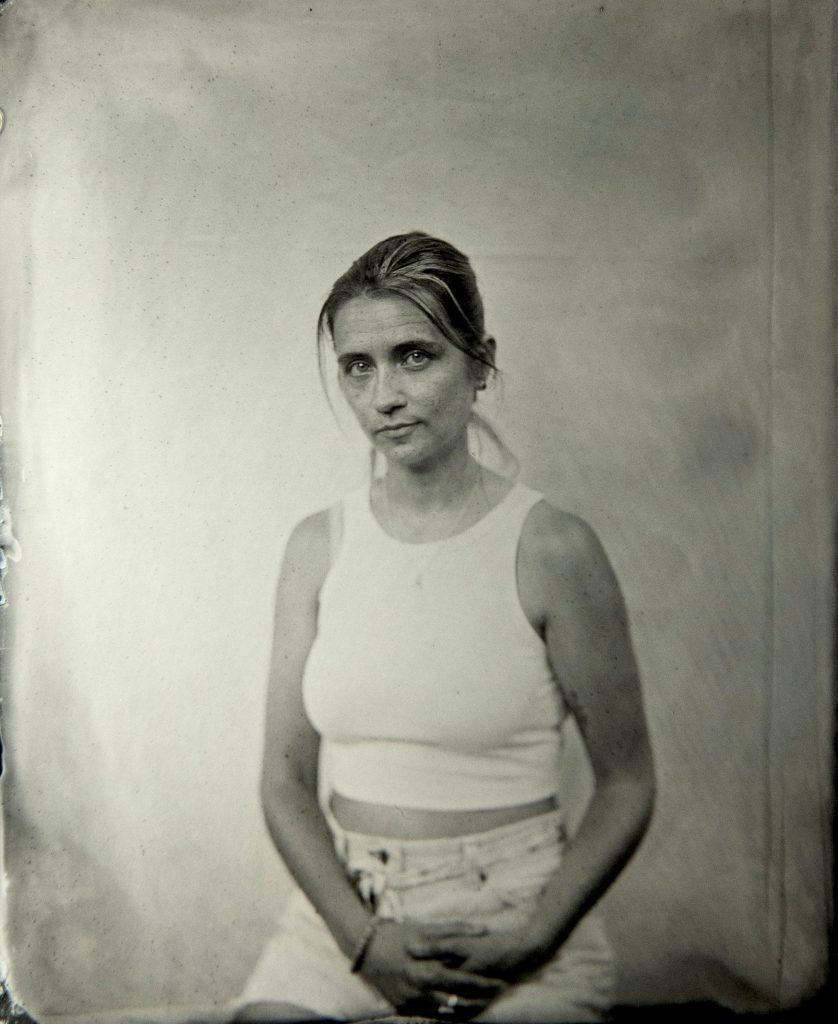
wet plate collodion tintype
5 x 4 inches
About the Artist
Written by Gail Obenreder
Photographer David Warren Norbut is passionate about portrait and documentary images, specializing in working with film to create wet collodion plate tintypes. He has a thriving practice, and his photographs have been published in The Guardian, The New York Times, and Rolling Stone, among others, and exhibited in galleries worldwide. But he started out as many young artists do – in school.
Norbut was born in New Jersey, attended middle school in Florida, and came to Delaware as a highschooler. In his sophomore year, he took a photography class and simply “kept going from there.” He photographed his friends and took pictures at punk shows, leading to his decision to attend art school and “keep honing my craft.” Over a decade ago, the Wilmington resident enrolled at Delaware College of Art and Design and graduated at a time when “film and darkroom skills were being surpassed by the digital age.”
Norbut spent years working in both analog and digital formats, but the higher the demand was for his digital work, “the less satisfied I became.” Seeking to “recapture the magic I felt as a young student in the darkroom,” he began to research early photographic processes as a possible alternative. When he “stumbled upon the historic 1850s wet plate collodion process,” where images are taken directly on to an aluminum or glass plate, “I felt like I was moving in the right direction.” A decade later, after teaching himself the process, he finds that working in this way has become “an obsession and the majority of my photographic efforts.”
As an artist, Norbut has always been influenced by early photographic practitioners like Henri Cartier Bresson and Edward S. Curtis, as well as contemporary photographers like Mary Ellen Mark, Bruce Davidson, Richard Avedon, and Sally Mann. But he also draws much of his inspiration from a wide range of visual artists, like Brandywine painter Andrew Wyeth, Delaware abstract Sculptor, former teacher and friend Stan Smokler, Spanish painter and ceramicist Joan Miró, and French sculptor Antoine Bourdelle.
Two of the most challenging aspects of working with his chosen photographic process are “chemistry and [the] cumbersome equipment.” But over the past decade, Norbut has “gotten used to it” and found solutions to those challenges. And he’s rewarded by how his chosen process is “freezing time, immortalizing faces, capturing life.” The portraits that earned him the Division’s Fellowship are striking juxtapositions of modern sitters that he portrays in the classic tintype style.
Norbut also writes songs and plays music with his friends. He is also a “staunch supporter of animal rights’ who is “happiest when traveling and exploring” with his wife. Inspired by preservation efforts in The First State and beyond, he’s currently scouting locations nearer at hand, hoping to make larger (8×10) tintypes “of the landscapes and seascapes in our home state of Delaware” that meld preservation with his historic photographic processes.
The Division’s Fellowship is “very much appreciated and quite validating,” and David plans to make use of this welcome award as he works to expand his current practice and undertake a new project.