

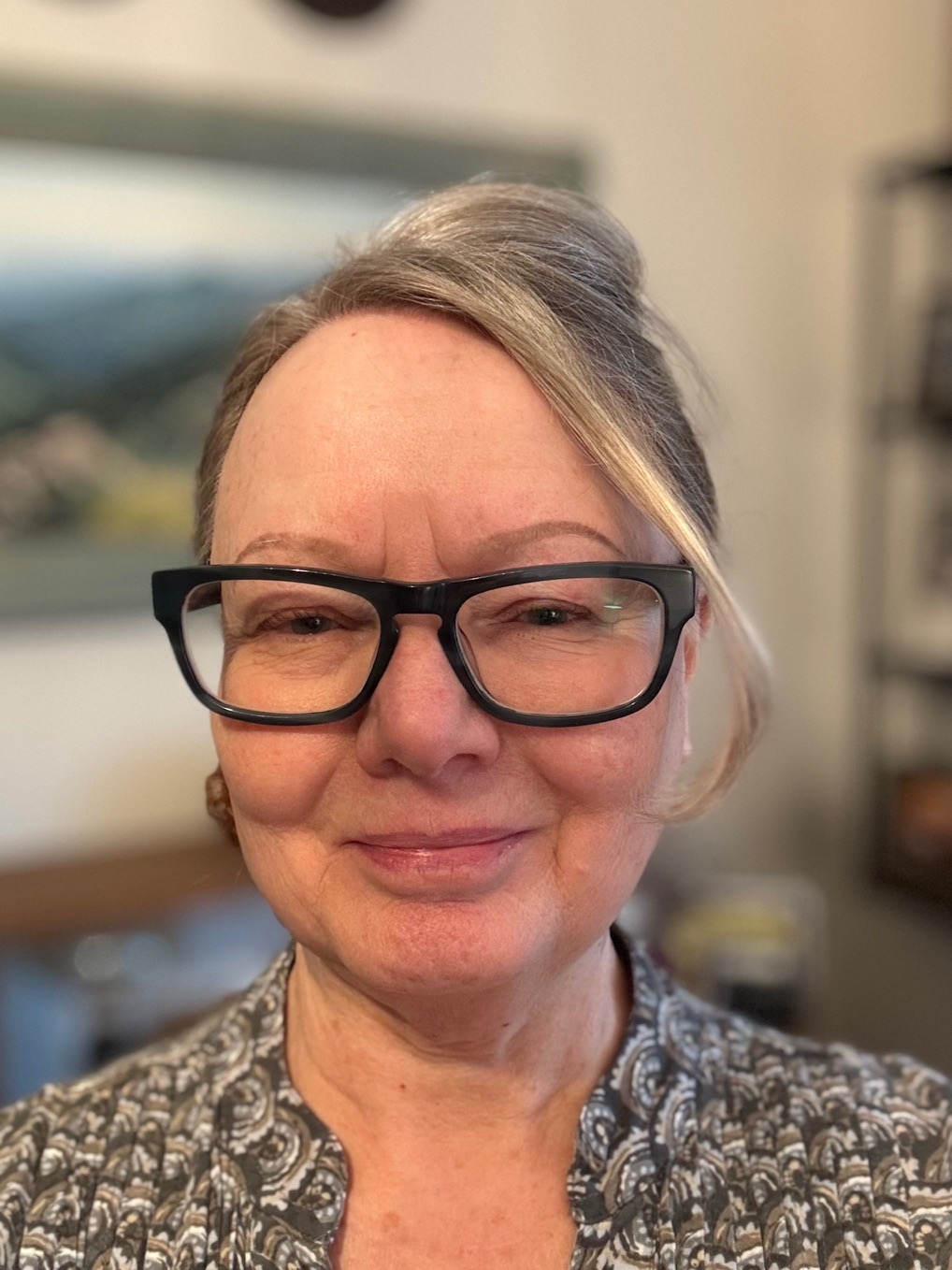
Catharine Fichtner
Established
Visual Arts: Painting
Wilmington
"I am fascinated by things that are shattered and how to make what is broken whole, or at the very least, find some meaning in what remains."
Work Samples
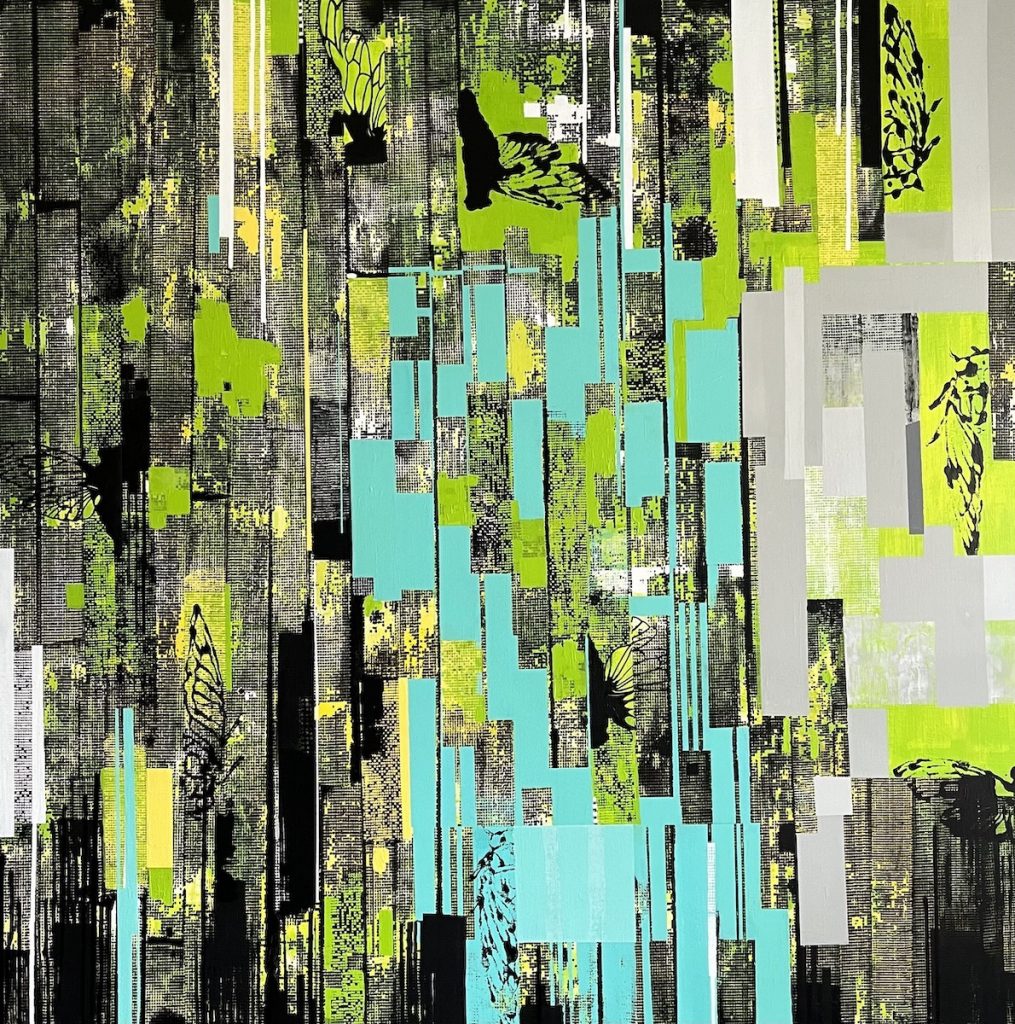
acrylic on wood panel
48 x 48 inches
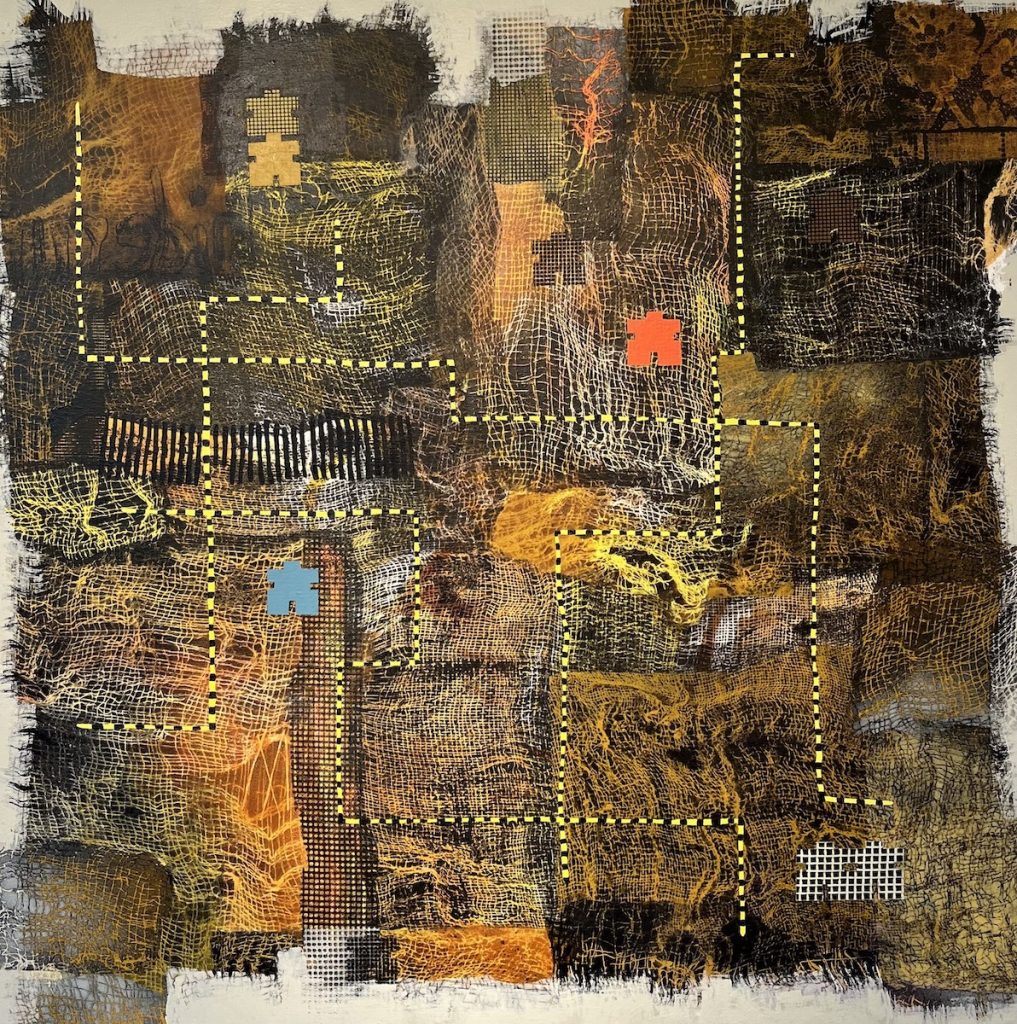
acrylic on canvas
40 x 40 inches
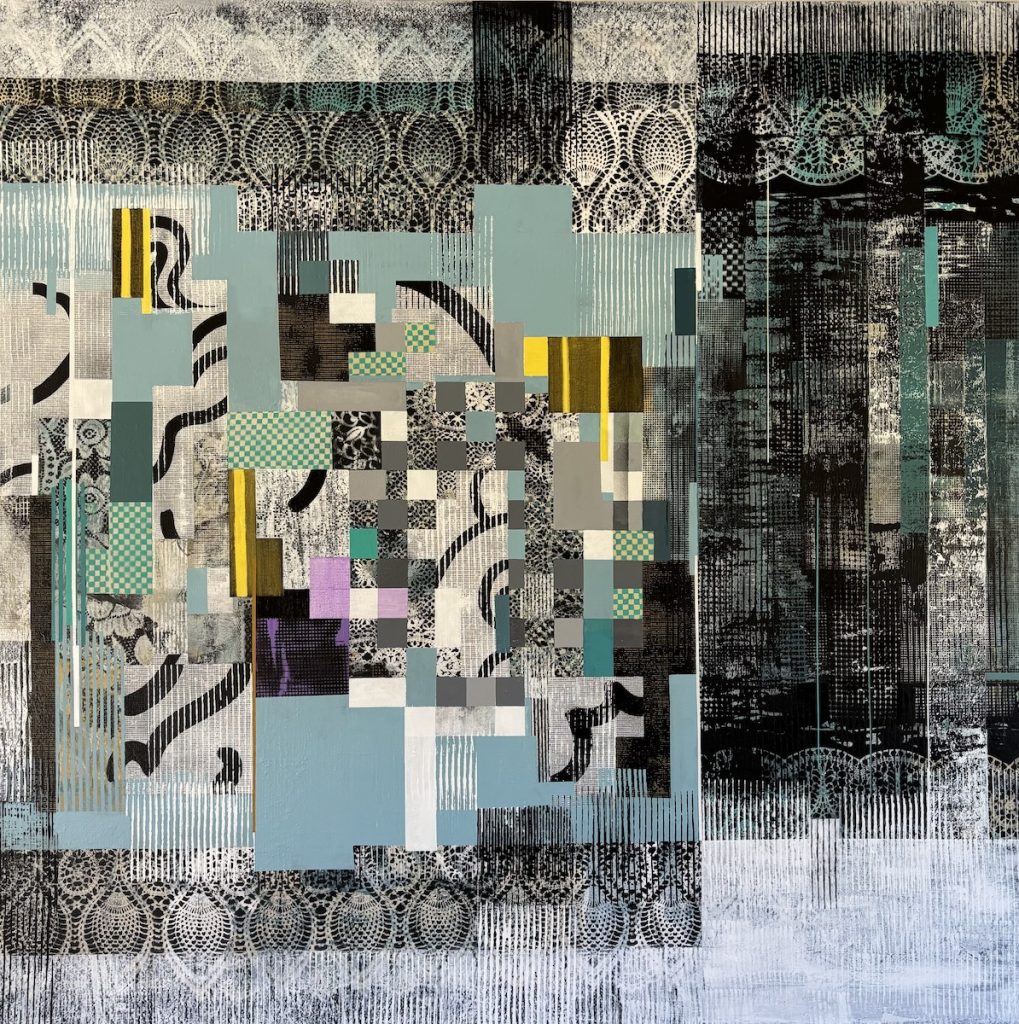
acrylic on canvas
66 x 66 inches
About the Artist
Written by Gail Obenreder
Art has been a lifelong passion for painter Catharine Fichtner. She began making art as a child, took painting classes in middle school, and majored in art in high school, where an influential teacher (Rober Kingsley) cemented her desire to be a painter.
Over her expansive career, Fichtner has created large-scale acrylic works – she calls them “abstract narration” – that consistently “grapple with how we find meaning within fragmented and coded information.” Much of her richly layered painting is influenced by how her Pennsylvania Dutch ancestors made quilts, “saving every shred of fabric to create textiles that brightened their lives.”
In her series Alterations 2019-2022, Fichtner incorporates her heritage with her use of lace, sewing, and the schematics of clothing patterns as “inspiration and armature on which to hang disguised narratives.” These paintings also incorporate “bits of realism” (like carefully rendered plants or animals) that “offer the viewer entry points” into her seemingly abstract works.
Fichtner grew up outside of Philadelphia and attended the Rhode Island School of Design for two years and then transferred to Tyler School of Art where she received her bachelor’s degree. She then moved to Delaware, living in Newark and Wilmington for ten years. Next she relocated to earn a Master of Fine Arts degree from Carnegie Mellon University, living and working in Pittsburgh for thirty years.
In 2023, Fichtner moved back to the First State, and she now lives and works in Wilmington.
Her paintings have been seen in over twenty solo and group exhibitions in Chicago, New York, Philadelphia, Pittsburgh, and Delaware (at the Delaware Museum of Art), and her work is held in numerous private and corporate collections.
Though she was inspired early on by the works of abstract artists like Milton Avery and Richard Diebenkorn and still admires contemporary paintings of all sorts, Fichtner confesses that she “doesn’t like to look at others’ work too much.” As an artist, she prefers to be inspired by “analog images, fabric, graffiti… random things that get my creative wheels turning.”
It’s important to Fichtner that she always “infuse a narrative within the formal elements,” and this search for a painting’s elemental meaning is what drives her practice forward. For her, “imbedding the narrative into the work is the most challenging part of painting.”
Fichtner strives to discover “what to do with a beautiful surface,” always looking for its message, and that’s when the work can become difficult. “I don’t like the feeling of being off balance with a painting, but I know that this is where I need to be.” When she successfully “infuses the painting with meaning,” the joy of finishing that work is Fichtner’s ultimate reward. She believes that it’s for the viewer to decide whether it’s a good thing or not, noting that “I will never give up on a painting.”
Calling herself a “classic introvert,” Fichtner loves being home with her partner and dog and zooming regularly with friends to talk about art. She’s “so excited to win this award” and plans to use her Division Fellowship to improve her basement studio space, installing a window exhaust fan to ventilate the toxic spray paints that she employs. She’ll also purchase a larger easel and take some east coast gallery trips, all designed to continue the “experimentation and creative insecurity” that is endemic to her lifelong work.