


Teddy Osei
Established
Visual Arts: Crafts
New Castle
"Everything begins with clay, as it holds memory and answers every touch."
Work Samples
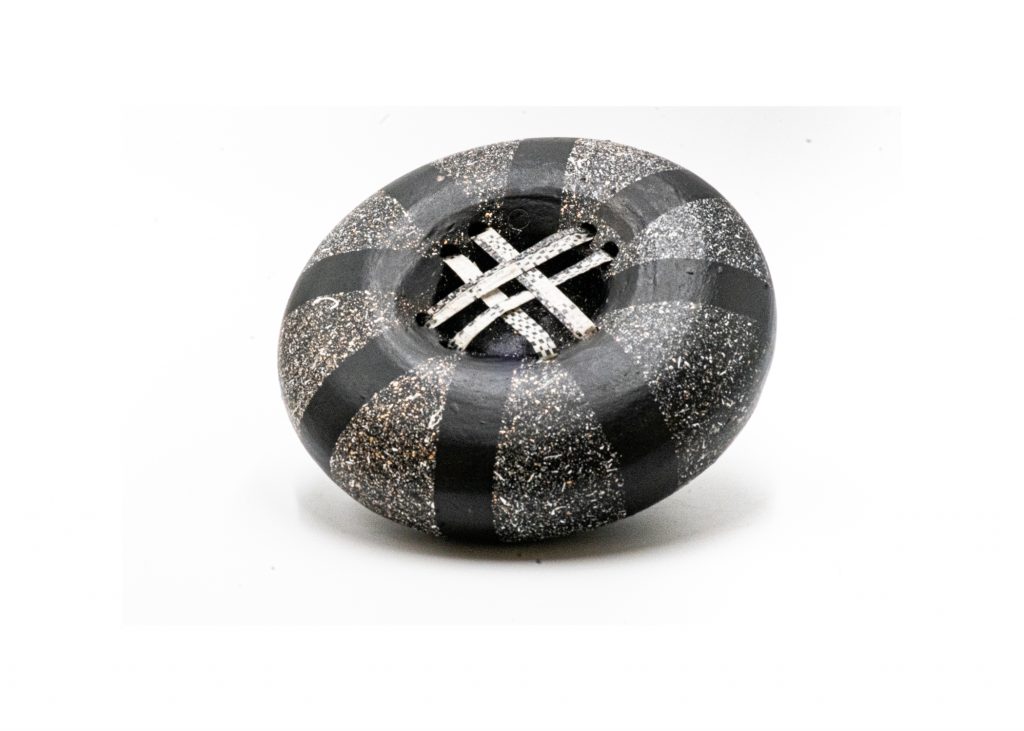
ceramics, glaze, Ghana-Must-Go bags
10 x 10 x 8 inches
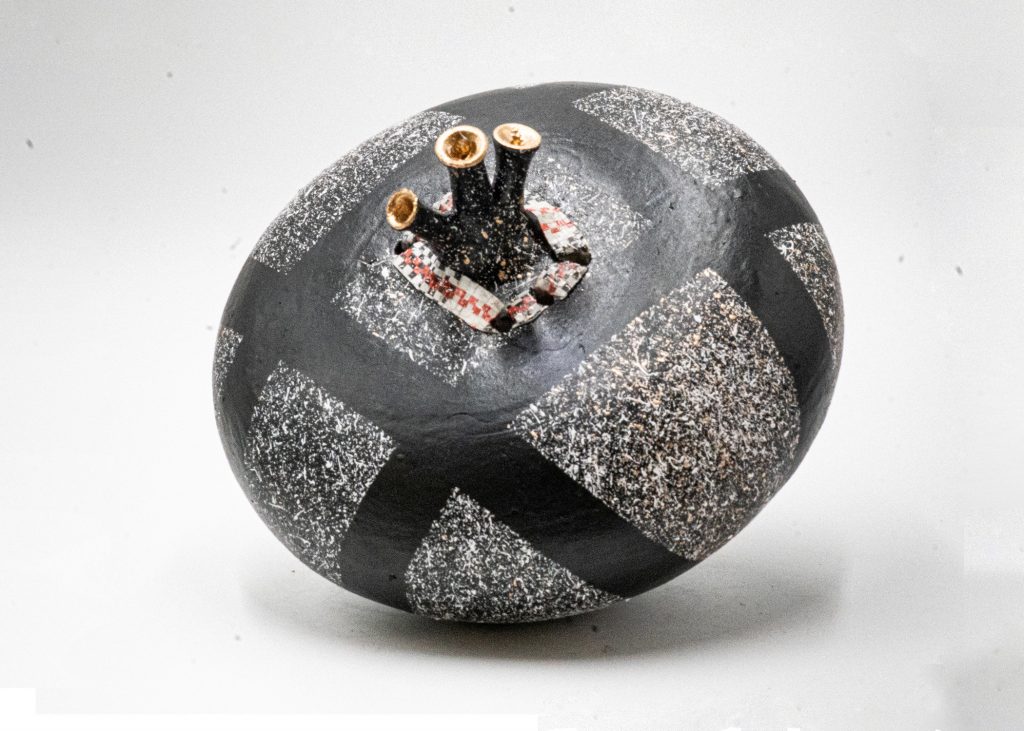
ceramics, glaze, Ghana-Must-Go bags
11 x 10 x 8 inches
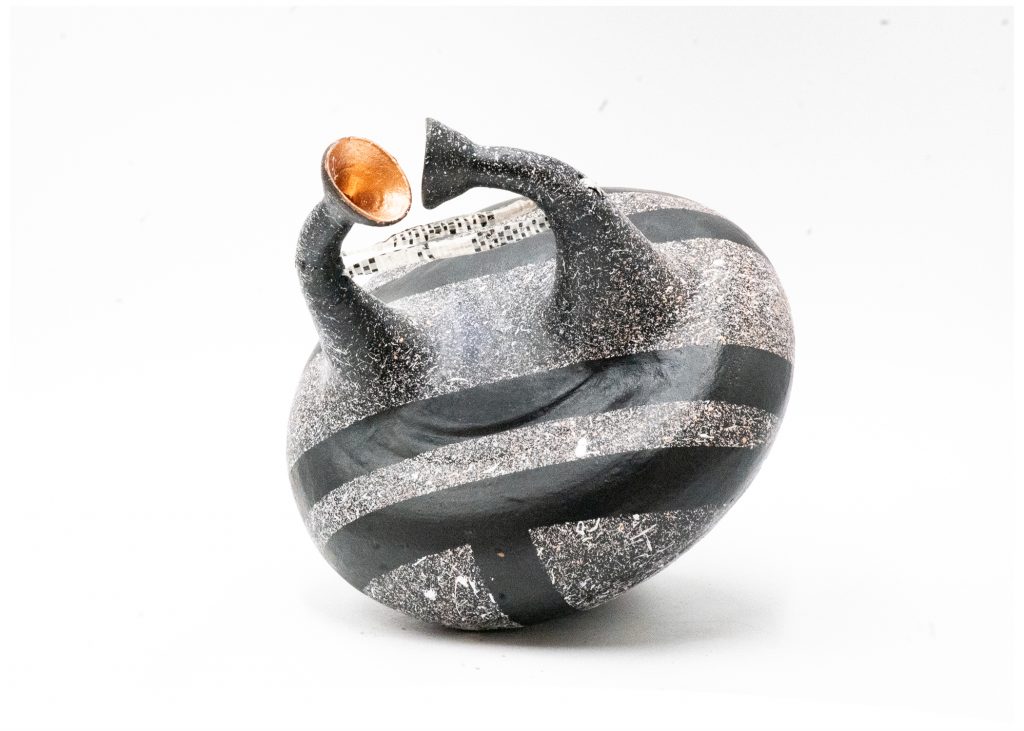
ceramics, glaze, Ghana-Must-Go bags
12 x 10 x 8 inches
About the Artist
Written by Gail Obenreder
Teddy Osei’s artistic journey began in Accra-Newtown, Ghana, where he and his friends gathered clay from the banks of the Odorna River, creating toys and household objects. “My earliest influence wasn’t a famous artist, but the land itself.” For him, clay has a living quality; “it can remember where it came from while helping to re-imagine what it might become.”
As someone who has “journeyed from one part of the world to another,” Osei understands migration and displacement. “The acts of leaving, arriving, and continually remaking oneself” have, over his substantial career, become the core of his practice. In his lifelong exploration of turning clay into vessels, Osei embodies “the identities we carry and the stories we weave.” His sculptures and installations resonate with both his past and his present experiences and “capture the movement, tension, and fluidity of my identity.”
Osei grew up in a close-knit Ghanian family that instilled in him the values of “community, tradition, and respect” that ground his practice as a ceramicist and an educator. He chose to study visual arts in high school, even when his family “had other ideas for my path,” and majored in ceramics at Kwame Nkrumah University of Science and Technology. Though his formal training was “centered on functional pottery,” a course in ceramic design techniques “opened my eyes to the world of sculptural forms.”
In Ghana, Osei created ceramics and teach at the university level, but in 2019 he came to the United States, studying and working in Illinois and Missouri. And in 2023 the New Castle resident moved to Delaware, when he accepted his current position as Assistant Professor of Ceramics at Lincoln University and also teaches design basics.
Over the past decade, Osei has had six solo exhibitions and participated in 30 group shows.
The vivid images of Ghanaian marketplaces – “the colors, thick scented spices, dust, and the humming voices of negotiation”– continue to ground his current work. He combines working on the potter’s wheel with slab and coiling techniques so that “each vessel carries a dual pulse … rooted in my own story, yet open to viewers in the hope [they] recognize their own journey.”
Osei is deeply inspired by his Lincoln University students as he watches them “discover clay, often for the first time.” They approach their work “without any rules or pretensions,” and their curiosity encourages him to look at anew at his own practice. Studio work is solitary and can feel like a “heavy process.,” but that isolated feeling disappears the moment that a viewer “stands in front of a piece and connects with it.”
While working with clay continues to be deeply rewarding, it’s an inherently unpredictable material that can crack or even explode in the kiln, and “glazes do not always behave as expected.” He finds the “constant negotiation between control and chance” has led to his understanding of “failure as an integral part of the creative process.”
Osei is a “big gamer,” something that it helps him stay close to faraway friends and relax from the “deep, heavy thinking” of his art into “pure fun.” He’s also grateful that his wife and children help him to balance academic life and studio work.
The Division’s Fellowship “feels like a warm welcome from Delaware, a validating signal that I am exactly where I need to be.” Osei plans to use his award to “expand, rather than pivot.” He will continue his current Shifting Grounds project of harvesting clay and found objects from the Delaware River as he works to establish himself in his new community.