

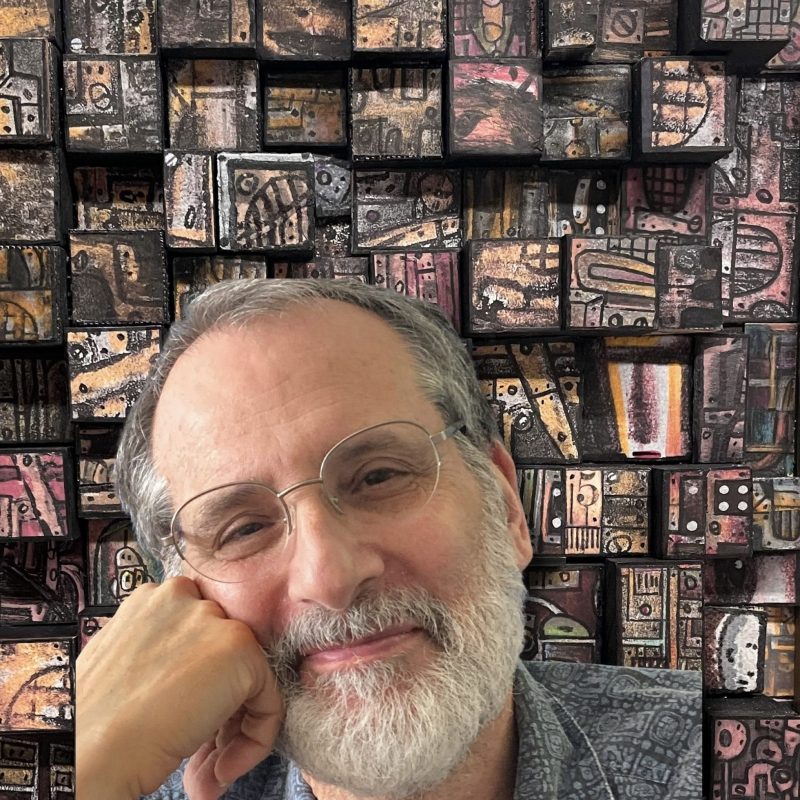
Michael Fleishman
Established
Visual Arts: Works on Paper
Milford
"I juggle paper, cardboard, and wood – and strive to address how materials function [both] as vehicle and structure."
Work Samples
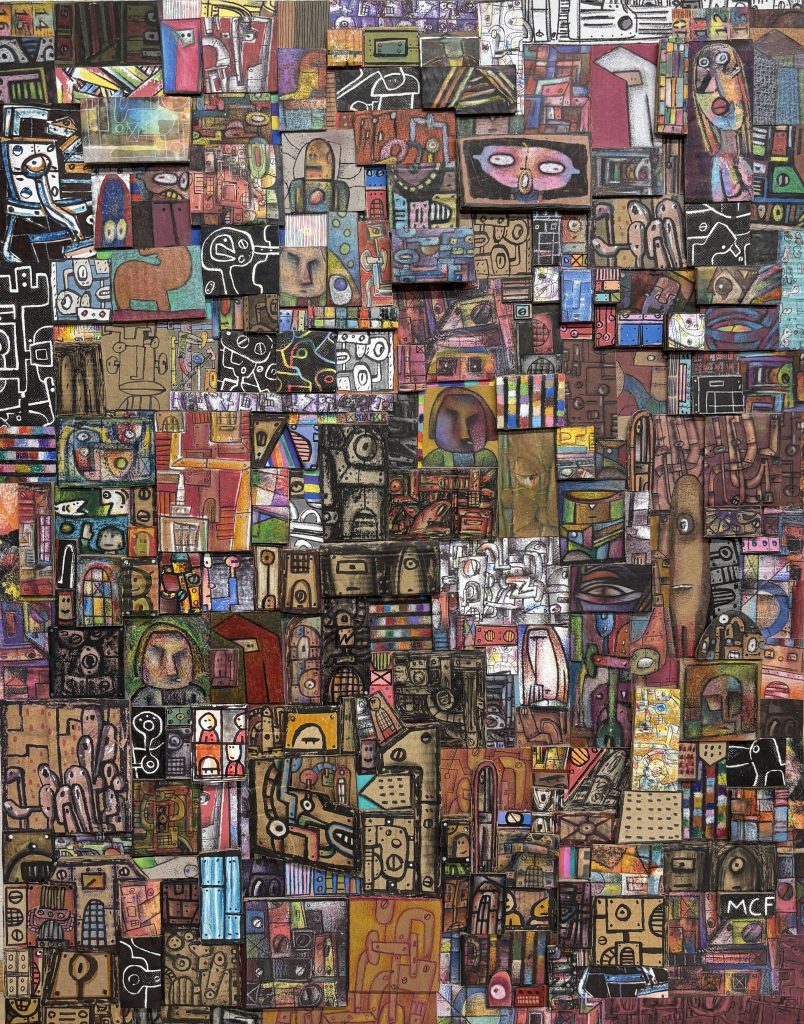
cardboard collage construction
30 x 24 x 2 inches
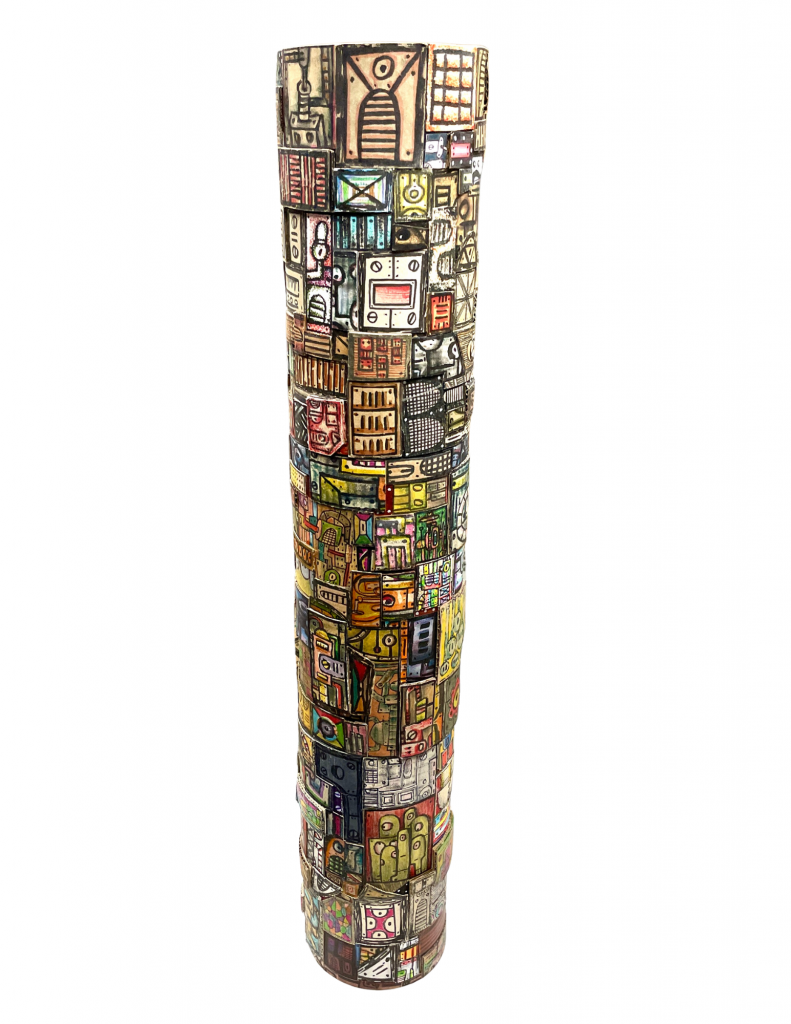
cardboard collage construction
30 x 5 x 5 inches
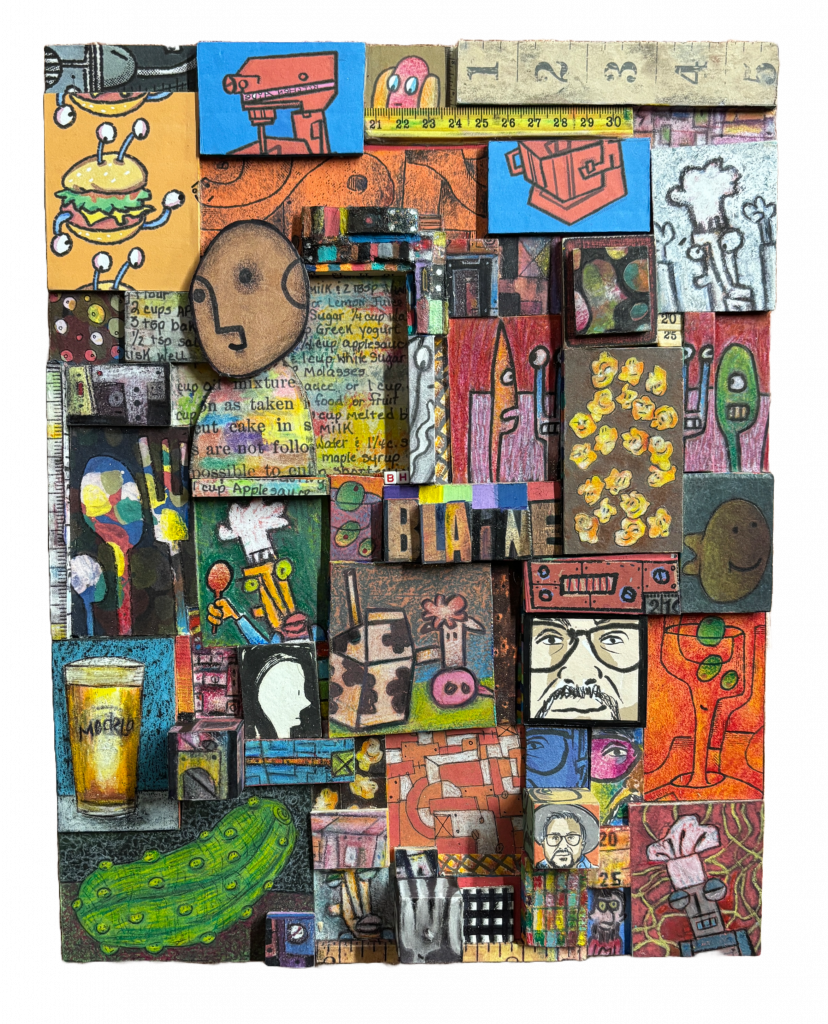
cardboard collage construction
14 x 11 x 1 inches
About the Artist
Written by Gail Obenreder
Michael Fleishman has had a long and varied career in the arts. Born and raised in Pittsburgh, Fleishman has a B.S. in art education and an M.A. in Fine Arts (painting and drawing), both from Indiana University of Pennsylvania. For 33 years he lived and worked in Yellow Springs, Ohio as he worked extensively in the Midwest as a freelance illustrator. There he also taught at the college level and wrote and published eight books on the business and practice of illustration and the fine arts.
The artist and his wife moved to Delaware a decade ago and now live in Milford. In his artistic practice, Fleishman uses a combination of found, traditional, and unorthodox materials. He merges these “odd pieces and shards” into a variety of formats and sizes that are often wittily layered. Fleishman likes to “lean into textures and patterns; robotics, mechanicals and ductwork; oddball organics and curious creatures,” often seeking to break out of rectangle or square in ways that don’t “abandon this shape [but] complement this form.”
To Fleishman, wood scraps and cardboard are “simple materials that present a simply wonderful challenge,” and they are at the core of his practice. When he first relocated, his primary material of choice was “inspired by the 300 [cardboard] boxes it took to get us to Delaware.” But recently, to keep his practice fresh he’s “branched out into other surfaces – fragmenting wood, manipulating rulers and pencils” – explorations into diverse found materials incorporated with mixed media and collage.
Early on, Fleishman was influenced by a wide variety of contemporary artists, from Ben Shahn to Franz Kline to Louise Nevelson, but he’s also been inspired by “every comic book I ever read” and the children’s book artists (like Maurice Sendak) in his collection. Today he’s discovered “great stuff” on the internet, which has literally introduced him to a world of artists. Cognizant of the fact that “you must be careful of the many rabbit holes you can stumble into,” he follows the work of creatives like Shaun Tan, Guy Billout, Rosa Roberts, and many more.
One of the challenges of his practice is to marry both traditional and unorthodox materials, tools, and techniques to explore how “3D surfaces inform line, shape, color, and value,” a search that creates “a dimensional emphasis that’s the connective tissue in [his] workspace.” Fleishman finds that one thing “joyfully leads to another,” creating a kind of “jigsaw puzzle” approach that has recently led him toward using magnets. This new material means that his media elements may “no longer be static,” and “working with new materials (like actual steel) has become a fascinating part of the mix” for him.
The discarded materials that form the backbone of Fleishman’s works come from a strong commitment to recycling and reusing normally discarded materials, and he proudly states, “Welcome to the Corrugation Nation!” He also enjoys playing his guitars and is a passionate cinephile – “My dad worked in and owned movie theaters all his (and my early) life” – who was a zombie extra in George Romero’s Day of the Dead.
Fleishman previously received the 2020 Emerging Artist award, and this current Established Fellowship will allow him to improve his studio facilities, acquire new tools, and devise ways to showcase and promote his work. The ebullient artist says, “thank you, thank you, thank you” to the Division, with gratitude for “your support and for giving me this wonderful opportunity.”